Considering breast enhancement is a deeply personal decision, one that deserves careful consideration, not myths or marketing.
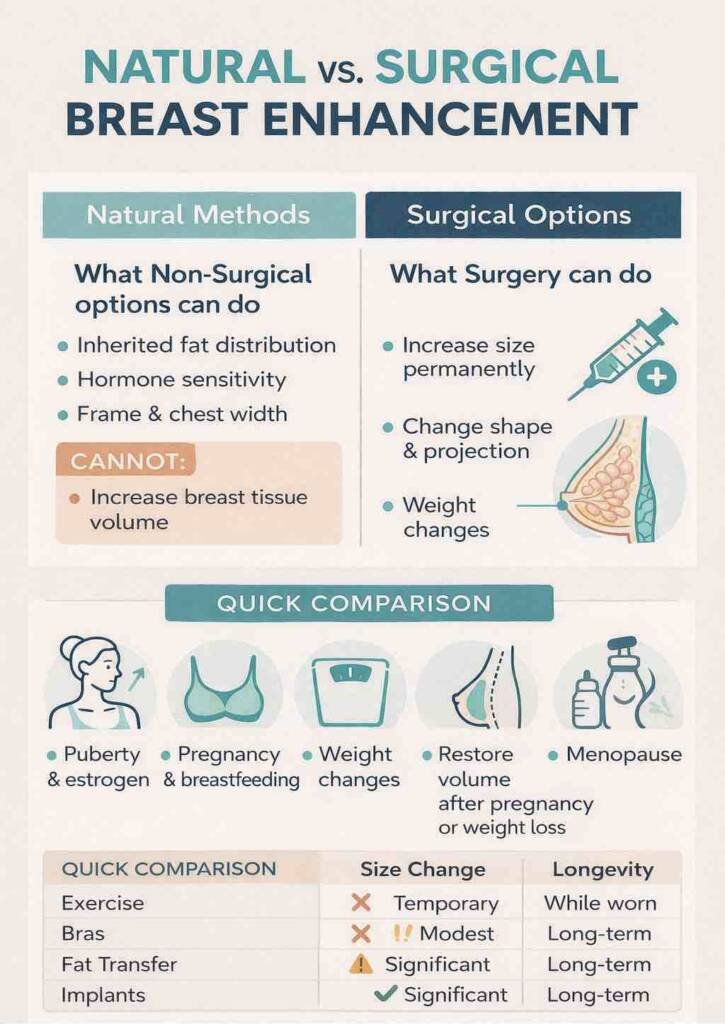
This guide will help you cut through the noise. Surgical breast augmentation is the only clinically proven method to permanently increase breast size. While exercise, supplements, and “natural enhancement” products are heavily marketed, they cannot increase actual breast tissue volume—though some can improve overall breast appearance through muscle toning and posture.
Whether you’re exploring non-surgical approaches or seriously considering surgery, we will go into resource the factors that influence size and what modern augmentation procedures actually involve. You’ll learn what works, what doesn’t, and what to realistically expect from each option.
Natural Breast Development and Life Stage Changes
Breast development begins during puberty when estrogen levels increase, typically between ages 8 and 13. Initial growth creates a breast bud beneath the nipple, often accompanied by tingling sensations, tenderness, or itching as skin accommodates tissue expansion. Complete maturation typically finishes around age 17, though some women continue developing into their early twenties.
Natural breast asymmetry affects most women, with research showing the left breast is larger in approximately 62% of cases, representing normal human development rather than a medical concern.
Throughout life, hormonal fluctuations cause predictable changes. Monthly menstrual cycles bring temporary swelling and sensitivity. Pregnancy triggers dramatic expansion preparing mammary glands for milk production, often increasing size by one to three cup sizes.
Breastfeeding maintains maximum glandular development, while menopause brings decreased estrogen that causes tissue reduction and density changes.
The Genetic Foundation of Breast Size
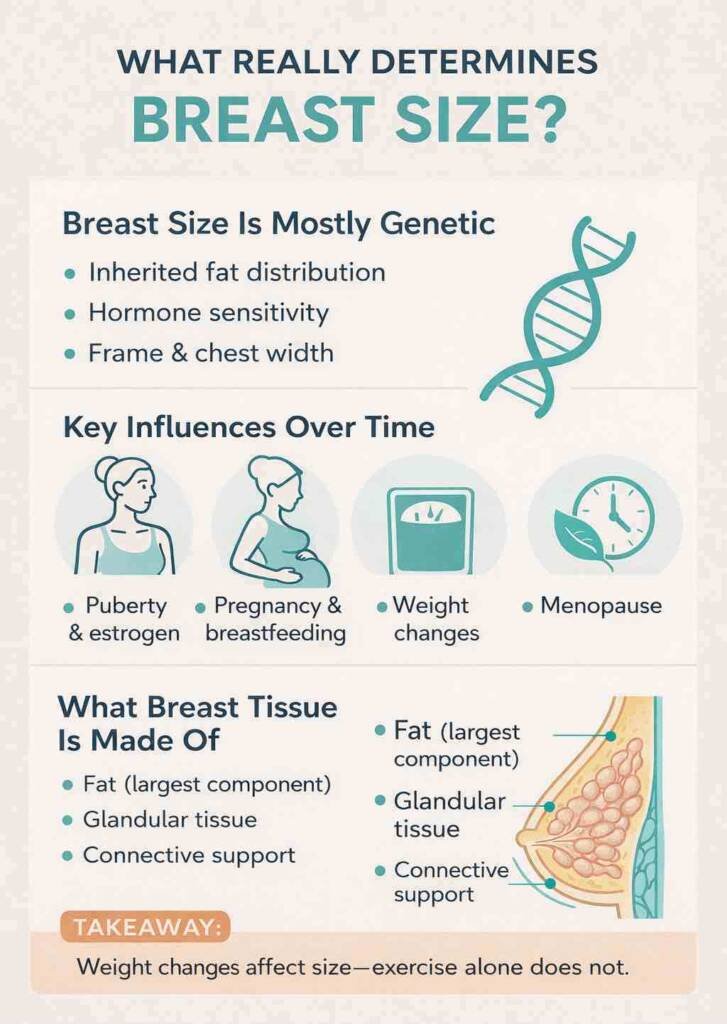
Genetics play the primary role in determining breast size. Women inherit breast characteristics from both maternal and paternal family lines through multiple genes controlling hormone sensitivity, tissue growth rates, and final size. Family history provides the best predictor of potential breast size.
Personal perception significantly influences how breast size appears relative to frame. Taller women with broader builds naturally carry larger breast volumes that would appear disproportionate on petite frames, while smaller breasts on compact body types often create better visual balance. Environmental factors can modify genetic predisposition but cannot override it completely.
Certain medical conditions affect development: thyroid disorders may postpone breast growth, while micromastia—underdeveloped breasts after puberty—can result from rare genetic syndromes or childhood trauma such as radiation therapy. These conditions represent uncommon causes distinct from natural size variation.
Key Factors Influencing Breast Size
While genetics establish the foundation for breast development, several modifiable and natural factors can influence how breast tissue develops and appears throughout a woman’s life.
Hormonal Impact
Estrogen serves as the primary hormone driving breast development and size changes. During puberty, rising estrogen levels stimulate tissue growth and fat distribution in the chest area.
Hormonal birth control alters natural hormone levels with varying results. Some women experience noticeable enlargement while others notice minimal changes. When breast size increases with oral contraceptives, the effect typically appears within the first few months and may persist throughout continued use.
These changes generally reverse after discontinuing medication, though some women maintain modest increases. Response degree depends on individual hormone sensitivity and the specific formulation’s estrogen and progestin content. Pregnancy triggers the most dramatic hormonal shifts, with significantly increased estrogen and progesterone levels preparing breast tissue for milk production and causing substantial size increases.
Body Composition and Weight
Since breast tissue consists largely of fatty tissue, body fat percentage serves as a significant size determinant. Gaining weight by 20 pounds or more often changes bra size due to increased fat deposits in breast tissue. Weight loss typically reduces breast size proportionally.
However, weight fluctuations don’t always translate to proportional breast changes. Some women experience significant breast changes with minor weight shifts, while others see minimal changes despite larger weight variations. This occurs because fat distribution patterns are genetically determined—targeted weight distribution to breast tissue alone remains physiologically impossible.
Women with lower body mass relative to height may experience smaller breast volumes due to reduced overall body fat stores. Research shows breast volume increases substantially with higher body mass index. For individuals at the lower end of healthy weight ranges, breast tissue development may remain modest since the body prioritizes fat storage in areas essential for metabolic function.
Athletic women with lower body fat often have smaller breast sizes. When overall body weight decreases through diet and exercise, breast size typically reduces as part of generalized fat loss—weight loss cannot be targeted to specific body areas.
Natural Approaches to Enlarge Your Breasts
Building chest strength, maintaining proper alignment, and choosing supportive undergarments can significantly improve the appearance of breasts without surgical intervention. Understanding what these methods can and cannot achieve helps set realistic expectations.
1. Chest Muscle Strengthening for Bigger Breasts
The pectoral muscles sit directly beneath breast tissue, providing foundational support. Stronger, more developed chest muscles create a lifting effect that improves breast shape and projection without affecting actual breast tissue size.
Push-ups form the cornerstone of chest training, targeting the entire pectoral region. Modified knee versions accommodate different fitness levels, while wall presses offer an accessible entry point: stand approximately arm’s length from a wall with feet shoulder-width apart, place palms flat against the surface at chest height, bend elbows to bring your chest closer to the wall, then press back to starting position.
Chest presses using dumbbells or resistance bands provide targeted muscle stimulation when lying flat and pressing weights upward in a controlled motion. Chest flies isolate pectoral muscles effectively by extending arms wide and bringing them together across the chest. Arm circles strengthen shoulders and upper chest—stand with feet shoulder-width apart and arms extended horizontally, then rotate arms in controlled circular motions for approximately 30 seconds per direction.
2. Posture Correction
Poor posture causes breasts to appear smaller and less prominent than their actual size. Slouching shoulders and forward head positioning diminish the natural chest profile.
Shoulder blade squeezes counteract rounded shoulders—pull shoulder blades together and hold for several seconds. Wall angels strengthen upper back muscles supporting proper alignment by standing against a wall and moving arms up and down while maintaining surface contact. Chest stretches address tight muscles pulling shoulders forward; doorway stretches and corner stretches effectively target these areas.
Daily posture awareness makes a substantial difference in breast presentation. Keeping shoulders back and spine straight immediately improves bustline appearance while benefiting overall physical wellbeing, reducing back strain, and supporting confident body language.
3. Proper Bra Selection
Research reveals approximately 80% of women wear incorrectly sized bras—about 70% wear bras too small for their actual size, while another 10% wear excessively loose styles. Proper bra fitting dramatically transforms breast appearance and comfort.
Professional fittings provide accurate measurements and style recommendations. Many lingerie stores offer this service at no additional cost.
Padded bras add volume and create enhanced cleavage through strategic padding placement. Push-up styles lift breast tissue upward and inward for maximum effect, creating temporary visual enhancement while worn—once removed, breasts return to their natural size and position.
Supportive features include wide straps, full coverage cups, and reinforced bands that distribute weight evenly and prevent sagging. Different necklines require specific bra styles for optimal results: T-shirt bras work under fitted clothing while balconette styles complement lower necklines. Regular bra replacement every 6–12 months maintains proper support as elastic materials lose effectiveness over time.
Women with small breasts like AA or A cup sizes may find specialty brands designed specifically for smaller chest measurements offer superior fit and comfort compared to traditional retailers. During physical activity, wearing properly fitted sports bras provides essential support and prevents discomfort, particularly important for women with developing or larger breasts.
Can Diet Influence Breast Size?
No foods or eating plans have been clinically proven to enlarge breast size. However, certain dietary choices may influence hormonal balance and body composition, which can affect breast appearance.
The Phytoestrogen Question for Increasing Bust Size
Phytoestrogens are plant-based compounds that mimic estrogen’s effects in the body, found in legumes, nuts, seeds, and whole grains. These compounds bind to estrogen receptors but produce weaker effects than natural estrogen.
Despite their hormonal activity, no clinical evidencesupports phytoestrogens for breast enhancement. The body’s natural estrogen levels typically far exceed what dietary phytoestrogens can provide. Research shows phytoestrogens may actually have anti-estrogenic effects in some cases, with impact varying significantly between individuals based on gut bacteria and metabolism.
Soy products contain isoflavones, a specific phytoestrogen type. Studies demonstrate that soy consumption does not increase breast size—the phytoestrogen content is insufficient to produce noticeable physical changes. Flax seeds contain lignans, another phytoestrogen category.
Ground flax seeds provide higher bioavailability than whole seeds, but no research supports flax seed consumption for breast enhancement.
Beyond general phytoestrogen sources, several specific foods may support breast health. Citrus fruits offer vitamin C with minimal calories, potentially supporting tissue maintenance without overall weight gain. Fennel seeds provide concentrated phytoestrogens traditionally used to support milk production.
Avocados supply beneficial fatty acids that may enhance tissue elasticity, while various legumes and tree nuts deliver proteins and compounds supporting overall breast tissue health. Both soy and flax provide nutritional benefits including protein, fiber, and healthy fats supporting overall health but should not be consumed specifically for breast enlargement. Women should maintain realistic expectations—these foods offer general health benefits but will not meaningfully change breast size.
Will Gaining Weight Increase my Bust?
Breast tissue is made up of fatty tissue primarily, making body weight the most significant dietary factor affecting breast size. This represents the only reliable dietary method for breast size increase—however, targeted weight gain for breasts alone is impossible.
Women considering weight gain should evaluate health implications carefully. Excessive weight gain carries risks including diabetes, heart disease, and joint problems. Healthy weight management focuses on balanced nutrition rather than size manipulation.
Extreme caloric restriction can significantly reduce breast size, while maintaining adequate nutrition supports healthy breast tissue composition.
Are There Any Commercial Products That Can Make Breasts Bigger?
The market contains numerous creams, pills, and supplements claiming to increase breast size naturally. Most products lack scientific validation and regulatory approval for breast enlargement purposes.
Many breast enlargement creams contain ingredients like estrogen or plant extracts such as fenugreek. These substances have not been proven effective for significant breast growth in clinical studies. Supplements marketed for breast enhancement often target hormonal pathways, but altering hormone levels without medical supervision can pose health risks and side effects.
While certain prescription medications like hormone therapy and antidepressants may cause breast enlargement as a documented side effect, over-the-counter supplements do not contain these active pharmaceutical ingredients. Women should never attempt to replicate prescription drug effects through unregulated supplements.
Breast enhancement supplements can interact dangerously with prescription medications, particularly blood-thinning drugs, causing serious health complications. The FDA does not regulate most breast enhancement supplements as medical devices or medications. Commercial breast enhancement products rarely produce lasting results—if any size change occurs, it’s typically minimal and temporary, disappearing once product use stops.
Do Massages Increase Breast Size?
Self-massage does not enlarge breasts despite popular claims. While the practice may feel pleasant and promote relaxation, no evidence supports massage as an effective method for increasing breast tissue volume. Some practitioners believe massage stimulates hormone production that could influence breast tissue, but scientific evidence supporting significant breast growth through massage remains limited.
Regular breast massage can improve circulation and may temporarily enhance breast appearance through increased blood flow. The practice involves gentle circular motions using fingertips, starting from the center and moving outward, spending 10–15 minutes per session using natural oils like olive or coconut oil.
The technique may help improve skin elasticity and firmness in the breast area.
Medical Procedures to Increase Breast Size
Surgical breast enlargement provides the most reliable and lasting results for women seeking significant size increases. When considering breast augmentation, choosing a qualified, experienced surgeon is critical to achieving safe, natural-looking results.
1. Breast Augmentation with Implants
Breast augmentation surgery involves placing implants beneath breast tissue or chest muscles to increase size and enhance shape. This cosmetic surgery procedure offers predictable results with various implant options.
Implant Types:
Silicone implants arrive pre-filled with silicone gel, requiring slightly larger incisions but providing more natural breast tissue texture that most surgeons prefer for realistic results.
Saline implants are filled with sterile salt water after insertion, offering flexibility in incision placement and allowing smaller initial incisions. When saline implants experience shell failure, the body safely absorbs the sterile salt water, making ruptures immediately obvious through visible breast size changes.
Procedure Details:
The procedure requires general anesthesia or IV sedation. Surgeons make incisions through three possible approaches: under the breast crease, around the areola edge, or through the armpit. Implant placement occurs either above the chest muscle beneath breast tissue or below the pectoral muscle, with the surgeon determining optimal placement based on implant type and desired size increase.
Recovery Timeline:
Most patients need three days off work, extending to three weeks for physically demanding jobs. Heavy lifting restrictions last four weeks, with sports activities resuming after six weeks. Light walking immediately after surgery promotes circulation and prevents complications, with comfort levels improving progressively throughout the healing period.
2. Fat Transfer Breast Augmentation
Fat transfer breast augmentation, also known as fat grafting, transfers fat from other body areas to increase breast volume naturally. This approach delivers the added advantage of body contouring, sculpting donor areas while enhancing breast proportions—patients receive simultaneous improvements to multiple body zones through a single surgical session.
The surgeon harvests fat through liposuction from areas like thighs, abdomen, or hips, simultaneously improving body proportions by removing unwanted fat deposits. After processing and purification, they inject the fat into breast tissue through small incisions.
Surgeons typically limit transfers to approximately 150–300cc per breast during a single session to optimize fat cell survival, with many experts recommending 200cc as the upper limit for optimal results. Larger volume goals often require staged procedures spaced several months apart, allowing each transfer to establish proper blood supply before adding additional volume.
Benefits
This method provides natural-looking results using the patient’s own tissue. Small incision points typically measure only a few millimeters and are placed in discreet locations such as the breast crease or areola border, healing to nearly imperceptible marks over time.
Fat grafting typically achieves more modest size increases compared to implants. You can expect to lose around 46% of the transferred fat, so your doctor will transfer more to compensate. The fat cells that successfully integrate develop their own blood supply and become permanent residents of breast tissue.
Clinical outcomes show survival rates vary based on surgical technique, with meticulous harvesting and placement methods yielding better long-term retention. Once the transferred fat stabilizes, surviving cells remain permanently without requiring future replacement procedures, unlike implants which function as medical devices with finite lifespans.
The Perception Gap
Many women perceive their breasts as smaller than they actually are, particularly when comparing themselves to edited images on social media or celebrities. This perception gap can negatively affect confidence and self-image, even when breast size falls within normal ranges for their body type.
Professional counseling can provide valuable support for women experiencing persistent dissatisfaction with their breast size. Mental health professionals help address underlying body image concerns, social comparison patterns, and self-esteem issues that sometimes accompany physical appearance worries. This therapeutic approach often proves particularly beneficial when breast size concerns significantly impact daily clothing choices, social confidence, or overall quality of life.
Developing body acceptance represents a valid alternative to surgical intervention for many individuals.
Comparison of Methods to Increase Breast Size Naturally and Surgically
| Method | Effectiveness | Cost | Time to Results | Permanence |
| Exercise | Slight | Free | 6–8 weeks | Temporary |
| Weight Gain | Moderate | Varies | Months | Reversible |
| Padded Bras | Visual only | $30–$100 | Immediate | N/A |
| Fat Transfer | Moderate | $8,000–$12,000 | 3–6 months | Permanent* |
| Implants | Significant | $6,000–$12,000 | 6–12 weeks | Permanent* |
*Results require proper maintenance and monitoring
Take the Next Step
If you’re considering breast augmentation or want to learn more about achieving your aesthetic goals, schedule a complimentary consultation with Dr. Bart Kachniarz at Dr. K Miami Plastic Surgery.
source https://drkmiamiplasticsurgery.com/how-to-get-bigger-breasts-natural-medical-options

No comments:
Post a Comment